Posted on 2026-01-05
What Causes Low Water Pressure and How to Fix It
Low water pressure makes showers pathetic, fills baths slowly, and frustrates anyone trying to rinse dishes. It's usually caused by one of a few common problems, most of which we can fix in a single visit.
Why low water pressure is more than just annoying

Low water pressure isn't just frustrating, it affects how you live. Showers that trickle instead of spray. Baths that take 20 minutes to fill. Washing machines and dishwashers that don't work properly because they're not getting enough flow. Taps that take forever to rinse soap off your hands.
Worse, low pressure can indicate underlying problems with your plumbing that'll get more expensive to fix if you ignore them. Corroded pipes, failed valves, or mains supply issues don't fix themselves, they get worse.
The good news is that most low pressure problems have straightforward causes and fixes. In this guide, we'll explain what causes low water pressure in Nottingham homes and how to fix it, from simple DIY checks you can do yourself to professional fixes we can sort in a single visit.
How to tell if you actually have low pressure (or if it's something else)

Before diagnosing low pressure, make sure that's actually what you've got. Sometimes what feels like low pressure is actually low flow caused by something else.
True low pressure means water comes out weakly from all taps and outlets. If only one tap has weak flow, that's not a pressure problem, it's a blockage or valve issue at that specific tap.
Test this by turning on multiple taps at once. If they're all weak, you've got low pressure. If some are fine and others are weak, the weak ones have localised problems like scaled aerators or partially closed isolation valves.
Check hot and cold separately. If cold taps have good pressure but hot taps don't, the problem's in your hot water system (boiler, cylinder, or hot pipework), not your mains pressure.
Normal mains water pressure in Nottingham is around 1.5-2 bar (roughly 20-30 PSI). You can buy a pressure gauge from DIY shops for £10-15 that screws onto an outside tap. Test your incoming pressure to see if it's within normal range.
If your pressure's suddenly dropped overnight, check with neighbours to see if they've got the same problem. If they have, it's likely a mains issue that Severn Trent needs to fix, not something wrong with your property.
Cause 1: Partially closed valves (the simplest fix)
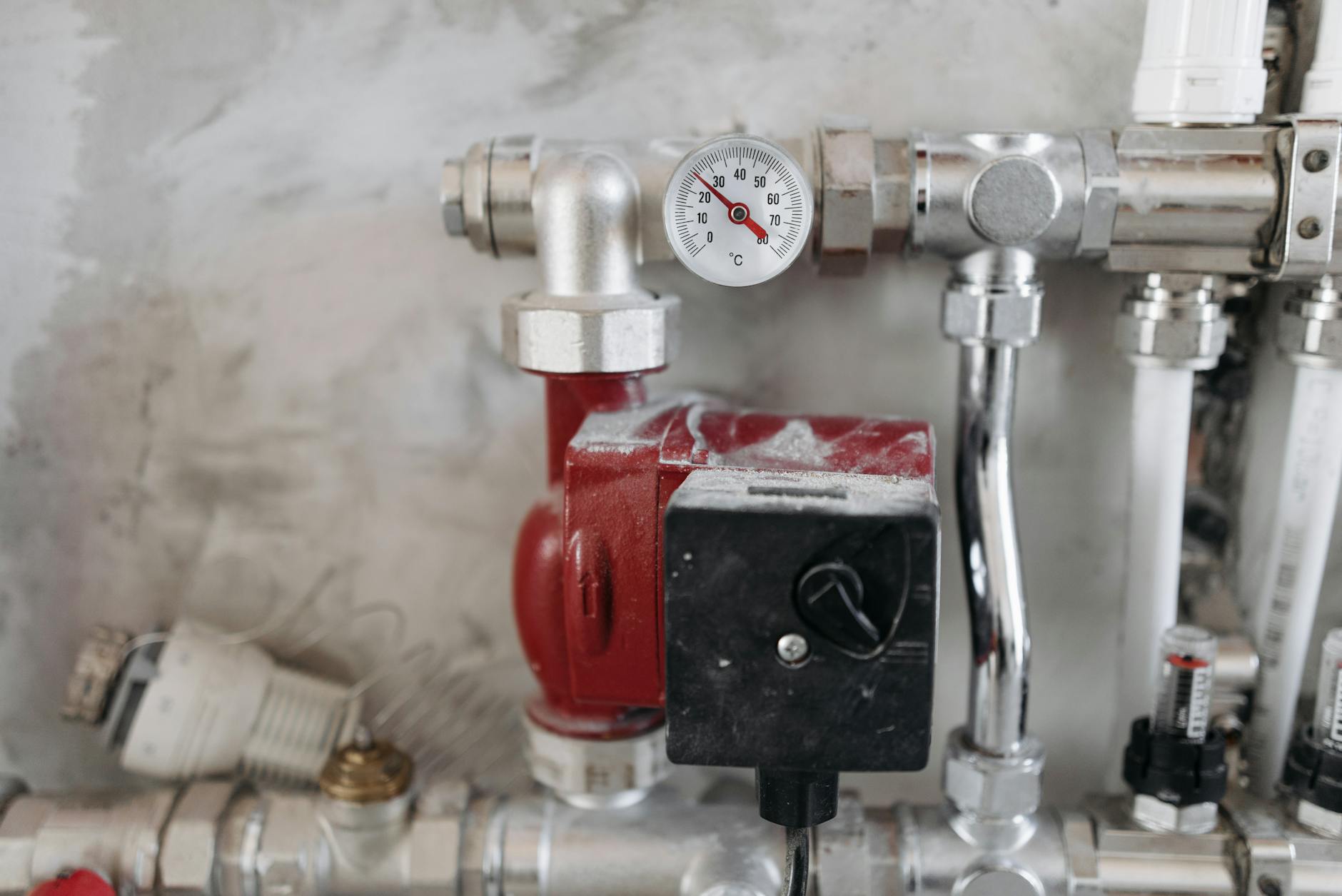
The single most common cause of sudden low pressure is a valve that's not fully open. Someone's done work, turned a valve off, and didn't open it all the way when they finished. Or it's been nudged and nobody noticed.
Your main stopcock is usually under the kitchen sink or where the water supply enters the house. It should be turned fully anticlockwise (lefty loosey) until it won't turn any more. If it's only halfway open, you'll get weak pressure throughout the entire house.
We've been called out to properties where the homeowner was convinced they had a major pressure problem. We checked the stopcock, found it three-quarters closed, opened it fully, and problem solved. Five-minute job, no charge.
If you've got a combi boiler, check the filling loop valves under the boiler. These should be fully closed (turned off) when not in use. If they're slightly open, water leaks from the mains into your heating system, dropping mains pressure and overpressurising the heating circuit. Turn them fully clockwise to close them.
Every tap and appliance has isolation valves under or behind it (small valves you turn with a screwdriver or by hand). If one's been turned off for a repair and not fully reopened, that outlet will have low flow. Walk around and check: kitchen sink, bathroom sinks, toilets, washing machine, dishwasher. Make sure they're all fully open.
It sounds too simple to be the answer, but we fix more 'low pressure problems' by opening valves than anything else. Check them all before assuming you've got a complex fault.
Cause 2: Limescale and corrosion narrowing your pipes
Nottingham's water is moderately hard, not as bad as London or the Southeast, but still hard enough to cause limescale buildup over years. The scale forms on the inside of pipes, narrowing the internal diameter and reducing flow.
If your pressure's gradually decreased over months or years rather than dropping suddenly, limescale buildup is likely. It's worse in hot water pipes because heat accelerates limescale formation. That's why you often get decent pressure from cold taps but weak flow from hot.
Old galvanised steel pipes corrode from the inside, creating rough surfaces that catch limescale and make the problem worse. We've cut open 40-year-old steel pipes in Nottingham properties and found the internal diameter reduced by half from corrosion and scale. No wonder the pressure was terrible.
Limescale in tap aerators and showerheads is easy to fix yourself. Unscrew the aerator from the end of the tap (it's the little mesh screen bit), soak it in white vinegar overnight to dissolve the scale, rinse it, and screw it back on. That fixes 90% of single-tap low flow problems.
Limescale in pipework is harder to deal with. We can flush sections of pipe and descale some accessible bits, but heavily scaled pipes usually need replacing. On Victorian and Edwardian properties in Sneinton, Sherwood, and Mapperley, we often replace entire sections of supply pipework during bathroom or kitchen renovations.
Combi boilers can suffer from scaled heat exchangers that restrict hot water flow. Descaling chemicals sometimes work, but badly scaled exchangers often need replacing at £400-£600. At that price, on an old boiler, you're often better off replacing the whole boiler.
Once copper or plastic pipes are badly scaled, they don't get better, they get worse. Replacing them with new pipe restores full flow and lasts another 50 years. It costs money upfront but solves the problem permanently.
Cause 3: Pressure reducing valves (PRVs) failing or sticking
Some properties have pressure reducing valves fitted to protect appliances and pipes from excessively high mains pressure. They're common in newer builds, flats, and areas with very high mains pressure (over 5 bar).
PRVs fail in two ways: they stick closed, giving you low pressure, or they stick open, giving you high pressure that damages appliances. If your PRV has failed and stuck partially closed, you'll get weak pressure across the whole property even though the incoming mains pressure is fine.
We've replaced faulty PRVs in Nottingham city centre apartment blocks where every flat suddenly lost pressure. The building's PRV had failed and nobody knew it was there until we tested pressures at different points and found the restriction.
Combi boilers have internal flow regulators and pressure switches. If these fail, the boiler restricts hot water flow even though incoming cold pressure is fine. You get weak flow from hot taps but normal flow from cold taps. Replacing the failed component costs £150-£250.
If you've got good pressure at outside taps but terrible pressure inside the house, suspect a PRV somewhere between the outside tap connection and the internal plumbing. We can test pressures at different points to locate exactly where the restriction is.
PRVs are serviceable and can sometimes be adjusted or cleaned rather than replaced. But if they're old or badly stuck, replacement is more reliable. A new PRV costs £150-£300 fitted depending on size and type.
Cause 4: Shared supply pipes in terraced streets
Victorian and Edwardian terraced streets across Nottingham often have shared supply pipes serving multiple properties. When the houses were built, water demand was much lower (no showers, washing machines, or dishwashers). A single supply pipe was adequate for several houses.
Now, with modern water usage, those shared pipes are often undersized. Everyone gets low pressure, especially during peak times in the morning and evening when multiple households are showering, washing, and cooking at once.
You can tell if you've got a shared supply if your pressure drops at the same times every day, or if neighbours complain about the same issue. It's not your plumbing, it's the supply pipe capacity that's the bottleneck.
Fixing this properly means upgrading to individual supply pipes for each property, which involves digging up the pavement, Severn Trent involvement, and costs of several thousand pounds. Most people just live with slightly reduced pressure because the upgrade cost isn't justified.
Some properties have old lead supply pipes that are narrow and restrict flow. Replacing lead supply pipes with modern plastic costs £800-£1,500 depending on length and whether you need to dig up gardens or driveways. It improves pressure and gets rid of lead contamination risk.
If the shared supply problem is severe, sometimes neighbours can club together to fund an upgrade and split the cost. But coordinating that many people and dealing with Severn Trent is a headache, which is why most don't bother.
Cause 5: Mains supply issues (not your fault)
Sometimes low pressure isn't your fault, it's the water company's problem. Leaks in the mains, high demand in the area, or supply issues mean everyone gets low pressure at certain times.
If your neighbours have the same problem and it's affecting everyone in the street, call Severn Trent and report it. They're responsible for maintaining adequate mains pressure up to your property boundary.
Mains pressure below 1 bar is considered inadequate by water industry standards. Severn Trent has a duty to provide at least 1 bar static pressure at your property boundary. If they're failing to do that, they need to fix it.
Sometimes mains pressure varies by time of day. Morning and evening peaks when everyone's showering and washing see pressure drop, late at night it recovers. If that's happening, it suggests the local mains are undersized for current demand. Severn Trent should upgrade them but it's expensive and takes time.
Leaks in the street mains cause pressure drops. If you notice wet patches in the road, gurgling from drains, or your street's been dug up recently, there might be an ongoing leak. Report it to Severn Trent, they'll investigate and fix it.
We can test your incoming mains pressure with a gauge and confirm whether it's within normal limits. If it's not, you've got evidence to give Severn Trent when you report the problem.
Fixes you can try yourself before calling a plumber
Check every valve in the house is fully open. Stopcock under the kitchen sink, isolation valves under sinks and toilets, appliance valves. Turn them fully anticlockwise until they won't go further.
Clean tap aerators and showerheads. Unscrew them, soak in white vinegar for a few hours or overnight, rinse, and refit. This fixes most single-tap or single-shower low pressure problems caused by limescale.
Check your combi boiler filling loop valves are fully closed. They're usually under the boiler and should be turned fully clockwise (off) when not in use. If they're slightly open, close them and see if pressure improves.
Ask neighbours if they're experiencing the same problem. If they are, it's likely a mains or shared supply issue, not something wrong with your property specifically. Call Severn Trent to report it.
Test pressure at different times of day. If it's worse at peak times (mornings, evenings) and better at night, that suggests a shared supply or mains capacity issue rather than a fault in your house.
If you've recently had plumbing work done, check that whoever did it fully reopened all the valves they closed. It's surprisingly easy to leave a valve three-quarters open and not notice until you realise pressure's down.
Professional fixes we can do
If DIY checks don't find the problem, call us. We'll test your incoming mains pressure first to establish whether it's adequate. If it's fine at the stopcock but terrible at the taps, the problem's internal and fixable.
We'll check for partially closed valves, failed PRVs, scaled pipework, and any restrictions in your plumbing. Depending on what we find, fixes range from opening a valve (free if we're already there for something else) to replacing sections of pipe or components.
Replacing failed PRVs costs £150-£300 fitted. Replacing scaled or corroded sections of pipe costs £200-£600 depending on how much pipe, where it is, and how accessible it is. Sometimes we can replace short sections, other times it makes sense to repipe an entire bathroom or kitchen.
Descaling taps and showerheads is cheap, £60-£90 for a callout to do several at once. Replacing tap cartridges or valves that are too scaled to descale costs £80-£150 per tap including the new cartridge.
For whole-house low pressure caused by undersized or old supply pipes, replacing the supply pipe from the boundary to your house costs £800-£1,500. That's digging, new pipework, connection, and reinstating. It's expensive but it permanently fixes supply pipe capacity issues.
Pump systems can boost pressure artificially if you've got persistently low mains pressure that can't be fixed any other way. Pumps cost £400-£800 installed and need annual servicing, so they're a last resort. We fit them in upper-floor bathrooms in loft conversions, or properties at the end of very long supply runs where pressure is marginal.
What it costs to fix low pressure in Nottingham
Simple fixes like opening valves or advising on DIY cleaning cost nothing if we're already attending for another job, or £60-£80 for a callout just for that.
Replacing tap aerators, cartridges, or valves costs £80-£150 per tap or shower including parts and labour. That's for single-outlet problems where everything else has normal pressure.
PRV replacement costs £150-£300 depending on size and type. That's usually a half-day job including testing and commissioning.
Pipe replacement costs vary hugely. A short accessible section under a sink might be £150-£250. A long run buried in walls or floors costs £400-£800 depending on how much disruption and reinstatement work is needed.
Supply pipe replacement from boundary to house costs £800-£1,500. That includes excavation, new pipe, connection, and making good. If you need to dig up a driveway or patio and reinstate it properly, add another £500-£1,000.
Pump systems for whole-house pressure boosting cost £400-£800 installed. They need annual servicing at £60-£80 and have a lifespan of 10-15 years, so factor in ongoing costs.
All our prices include labour, materials, VAT, and testing. We don't quote ex-VAT and surprise you with 20% extra at the end. You'll know the total cost before we start work.
When to call us about low water pressure
If you've checked valves, cleaned aerators, and asked neighbours, and you still have low pressure, call us. We'll diagnose it properly and quote you for fixing it permanently.
If pressure has suddenly dropped and you can't find an obvious cause like a partially closed valve, call us. Sudden drops can indicate a leak, a failed component, or a mains problem that needs investigating.
If only hot water has low pressure, it's probably your boiler or hot water system rather than mains pressure. We can diagnose boiler flow issues and fix them.
For low pressure that's been gradually getting worse over years, it's likely scaled or corroded pipes that need replacing. Call us for an assessment and quote. Living with terrible pressure forever isn't worth it when fixes are often cheaper than you'd expect.
Call us on 0115 912 3456 to describe what you're experiencing. We'll book a visit to diagnose it properly. If it needs a visit, we'll give you an idea of likely costs before booking. Our lines are open Mon-Thurs 8:30am-6pm, Fri 9am-4pm. <h2>Related Services</h2><ul><li><a href="https://nottinghamplumbers.co.uk/emergency-plumbing.html">Emergency Plumber</a></li><li><a href="https://nottinghamplumbers.co.uk/blocked-drains.html">Blocked Drains</a></li><li><a href="https://nottinghamplumbers.co.uk/boiler-repairs.html">Boiler Repairs</a></li></ul>